
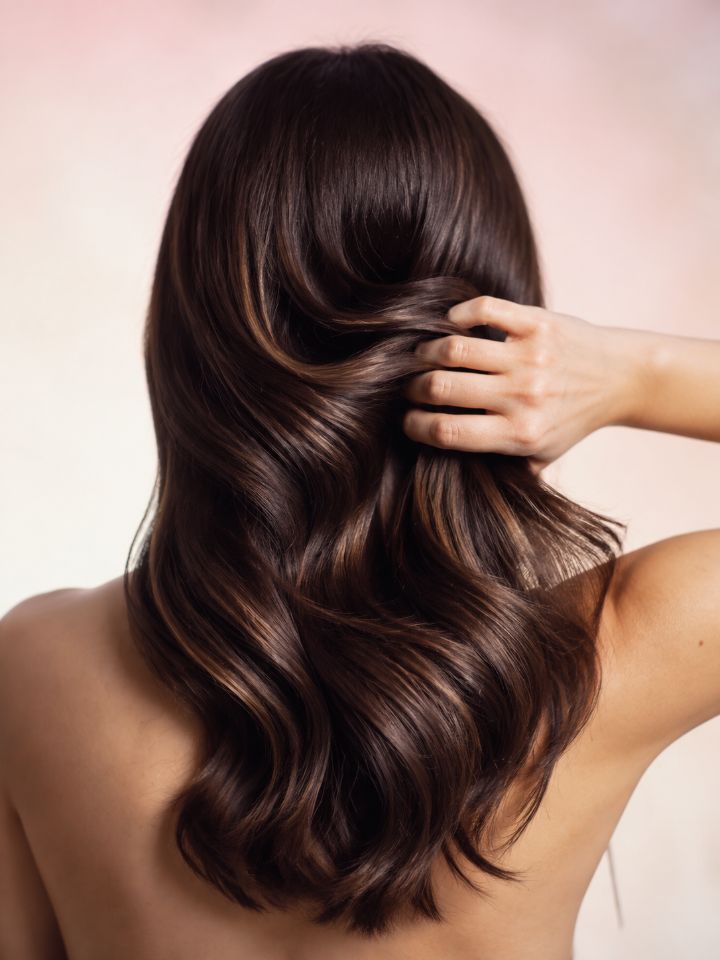
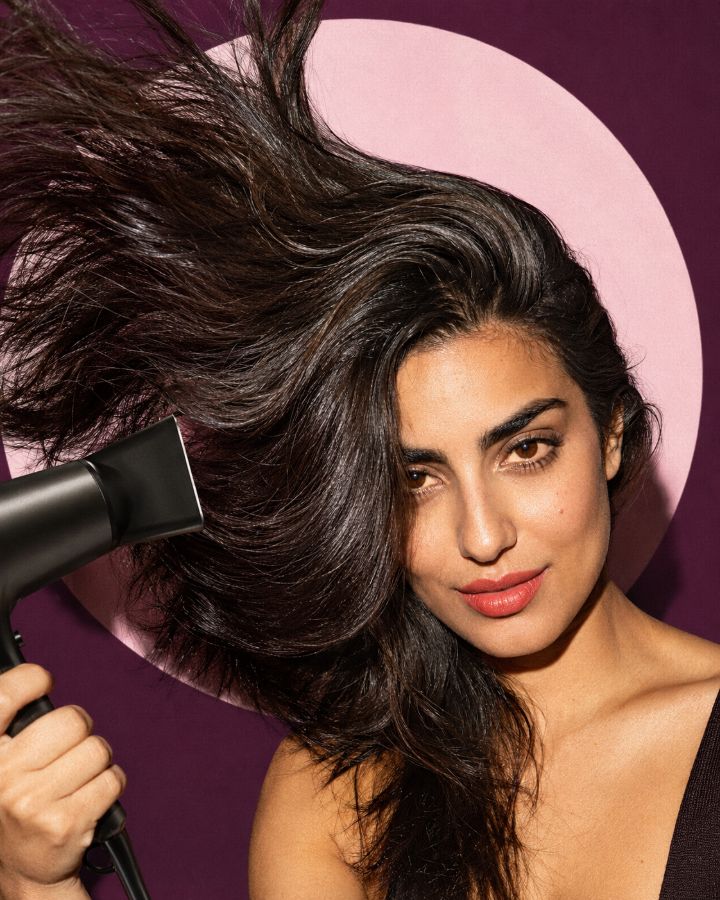




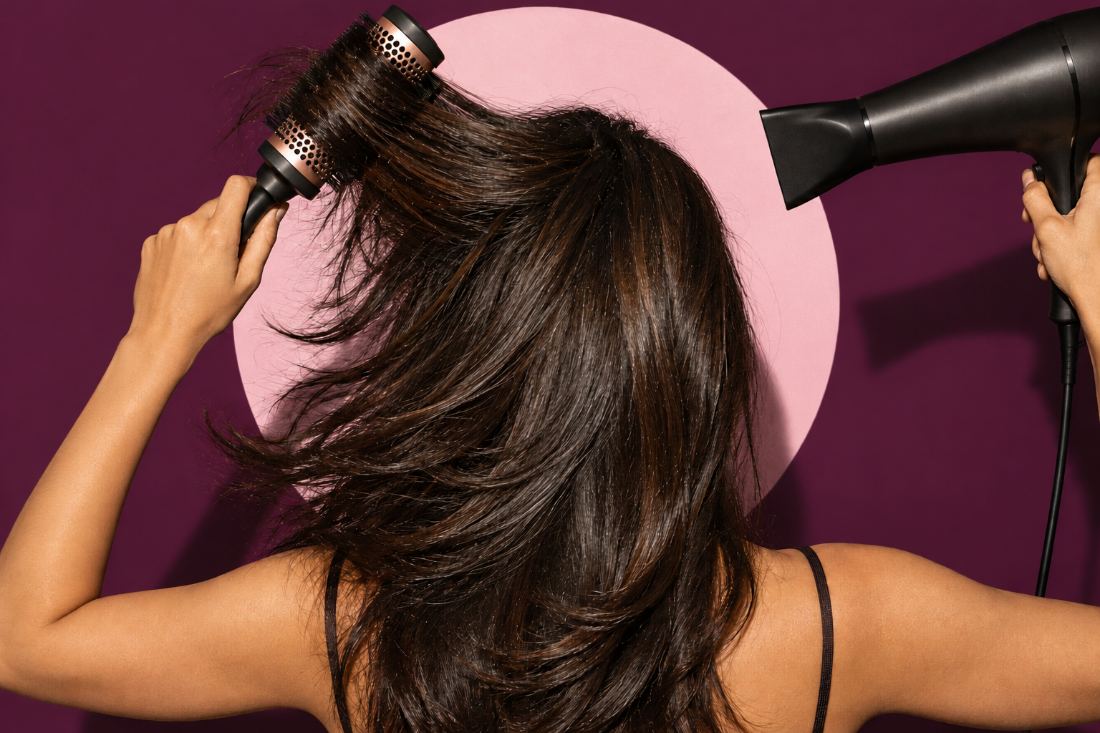
A salon blow-dry should not be a one-night thing. With the right prep in the chair and a few small habits at home, most of our clients keep theirs polished until day four, and some make it to the weekend. Here is exactly what we do, and what we ask you to do.
It starts in the chair
The finish you take home is only as good as the wash underneath it. We shampoo twice, the second time focused on the roots, and condition from mid-length to ends only. Product sitting at the root is the number one reason a blow-dry falls flat on day two.
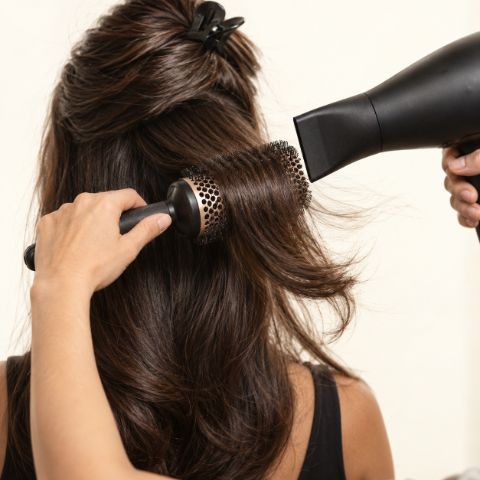
We then rough-dry to about eighty percent before a brush touches your hair, work in small sections with a heat protectant, and lock each section with a cool shot. Tell your stylist how much volume you actually need for the week ahead; a blow-dry built for maximum lift on day one collapses faster than a slightly softer one.
Ask her to keep oils and serums off the roots. A drop on the ends is enough.
Night one decides everything
Cotton pillowcases pull moisture out of the hair and create friction, which is why so many blow-dries look tired by morning. Silk or satin, either a pillowcase or a scarf tied around the hair, makes the biggest difference of anything on this list.
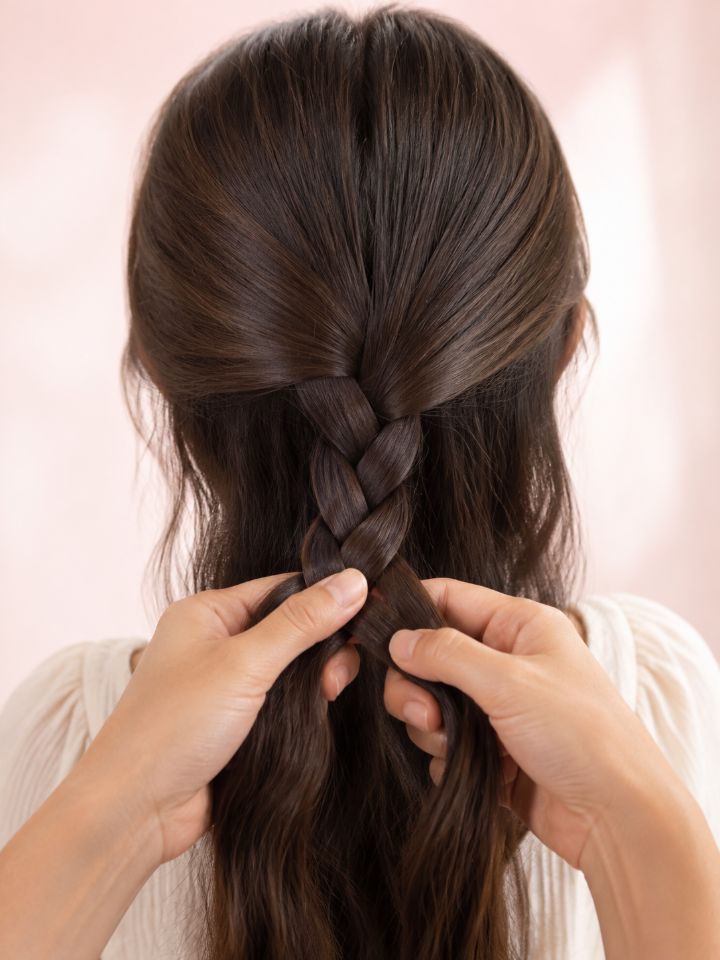
For volume, gather the hair into a very loose, high bun on the crown with a soft scrunchie, never an elastic. For a sleek finish, twist it loosely to one side and wrap it in the scarf. Keep it well away from the steam of the shower: humidity is water, and water undoes a blow-dry.
Days two and three: touch less, refresh smart
Apply dry shampoo at the roots the night before, not in the morning. It absorbs oil while you sleep, and a brush-through the next day leaves no white residue.
Then, hands off. Every time you run your fingers through your hair you move oil from your skin to your lengths. Wear a shower cap when you bathe, tie a low bun at the gym, and on a humid Doha or Cairo afternoon keep a light scarf for the walk to the car and a little anti-humidity mist for the ends.
If a section has dropped, refresh only that section. A round brush and the dryer on low heat, on the fringe or the face-framing pieces, takes three minutes and leaves the rest of the style untouched.
Day four, and when to let go
By day four a soft wave or a low ponytail is still a blow-dry doing its job; a little movement in the lengths often looks better than day one. Some clients twist the front sections back with a claw clip and get another evening out of it.
But if the roots are truly oily or the scalp starts to itch, wash. No blow-dry is worth an unhappy scalp, and you will get a better one next time on clean hair.
Tell your stylist how you sleep, how you train and how you commute. Those three details change how we finish your hair, and they are the difference between a blow-dry that lasts one night and one that lasts four.